
🥃 A Big Mac & Muir - Leith's Macdonald & Muir
A name that features in every Leith Whisky Trail tour is that of Macdonald & Muir. With their flagship brand – Highland Queen, named after Mary Queen of Scots who arrived in Leith from France in 1561 – well-known both near and far, they were one of Scotland’s prominent players in the Scotch whisky trade. But who were they?

Well, the company started as a partnership between two whisky entrepreneurs: a certain – you guessed it – Mr Macdonald and Mr Muir.
Both in their early thirties, Roderick Macdonald and Alexander Muir originally started out in 1893 in Leith’s Kirkgate; blending their casks at the Edinburgh & Leith Warehousing Company, which was over near Anderson Place, and storing their whisky at William Sanderson & Son’s premises just across the road.
Seven years earlier, in 1886, the then twenty-six year old Roderick Macdonald had married Margaret Muir – who happened to be Alexander’s sister.

Now, after the collapse of Pattisons Ltd, Macdonald & Muir took advantage of the premises on Commercial Street becoming vacant, moving their business there in 1901. And this is where they stayed for decades to follow.
After moving, the company continued to prosper. And so, with aspirations to become more than just blenders and bottlers and to secure the supply of malt fillings for their blends, Macdonald & Muir engaged in a strategy of expansion. In 1920, the company purchased Glen Moray Distillery in Elgin. But two years prior to that, it had acquired Glenmorangie Distillery outright.
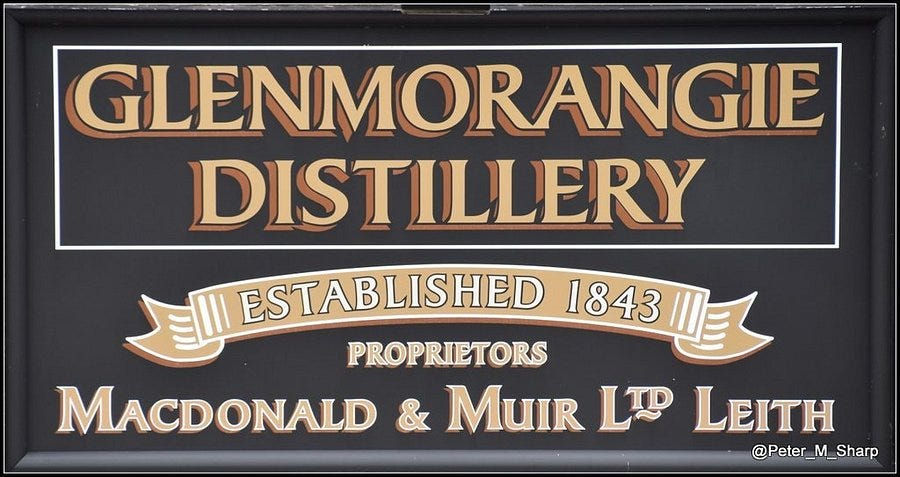
Macdonald & Muir had also previously acquired the Leith firm of James Martin & Co Ltd back in 1912. Now, I have touched on the James Martin V.V.O blend in a previous email for paid subscribers. So, this week’s paid content not only looks at the company of James Martin & Co Ltd – specifically with a couple of bankrupt Macdonald brothers in mind – but also focuses on the more recent history of this group of companies.
But back to Macdonald & Muir...
One of the interesting things about the Highland Queen blend is that Macdonald & Muir claimed they vatted the single malts together but kept the grain whiskies separate until the bottling stage. Whereas, at the time, it appears as though most others would consist of blended whisky which had undergone a marrying period in casks before bottling, Macdonald & Muir claimed to prefer this alternative process to ensure a higher quality blend.
Alexander Muir died in 1935 aged seventy-five. He had married quite late in life and appears not to have had any children. On the other hand, Roderick Macdonald – who had died the year before – had two sons and two daughters. And his sons, Roderick John Macdonald and Alexander Muir Macdonald, ensured the family name continued after they became directors of the firm of Macdonald & Muir Ltd which had been incorporated in 1936.

In 1948, the holding company of Macdonald Martin Distilleries was formed to include all the firm’s assets, with Roderick John Macdonald as Chairman (his brother, Alexander, having died two years previously).
In 1995, Macdonald & Muir – then under the holding company name – announced that the company was moving from Leith to a new larger site in Broxburn. The move took place the following year but not before a special bottling was released for the Leith staff:

From then on, the company became known as Glenmorangie Limited.

Now, if you thought the whole women and whisky thing was a relatively new concept, you’d be wrong. Back in 2002, Macdonald & Muir created a fashionable new whisky aimed at enticing more women to ditch their usual drink and try a dram instead.

I can only imagine that women across Morningside must have been overjoyed at this news.

In Philip Morrice’s wonderful Schweppes Guide To Scotch, written in the early/mid 80s, he states that it is the Scotch whisky industry’s duty to maintain the standards by which others will judge it. He then quotes David Macdonald, founder Roderick’s grandson, who stood down as chairman of the company in 1995. He said that only by continuing to maintain such high standards will our whiskies, and indeed Scotch whisky as a whole, continue to maintain a position as the world’s most prestigious and companionable drink.
Given the current landscape, these continue to be wise words indeed!
Slàinte! Justine